New Reflections: Psychedelics Will Not Save Us, Unless….
07/15/26
I recently took time to look over a blog post I wrote four years ago. I went to a psychedelic summit and was on a panel around psychedelics at UVM, and finding myself inspired to share the post, I realized I'd better review it first. I was fascinated to see that not much has changed in my overall thinking. I’d likely be less righteous around ‘truth’ being the only worthy goal of the psychedelic research and inquiry, but I get what I’m trying to say; “We have these fantastic friends, let’s use them to keep digging deeper!” Perhaps I would point out more clearly; Yes, we need to help people heal from their traumas because many people are suffering RIGHT NOW, but let’s also slow down. We have an opportunity to think grander. Let’s think grander!
Psychedelics historically were used in rituals and vision quests to have clear sight. There is a respect and sacredness in taking these medicines. They are powerful, mind-altering substances and need to be honored. If we don’t have professionals who understand the vastness of the mind, we can only heal so much. Let’s keep digging in, in the profession and in our own minds.
07/07/22
“We cannot solve our problems with the same thinking we used when we created them.”
“Insanity is doing the same thing over and over again and expecting different results.”
Einstein
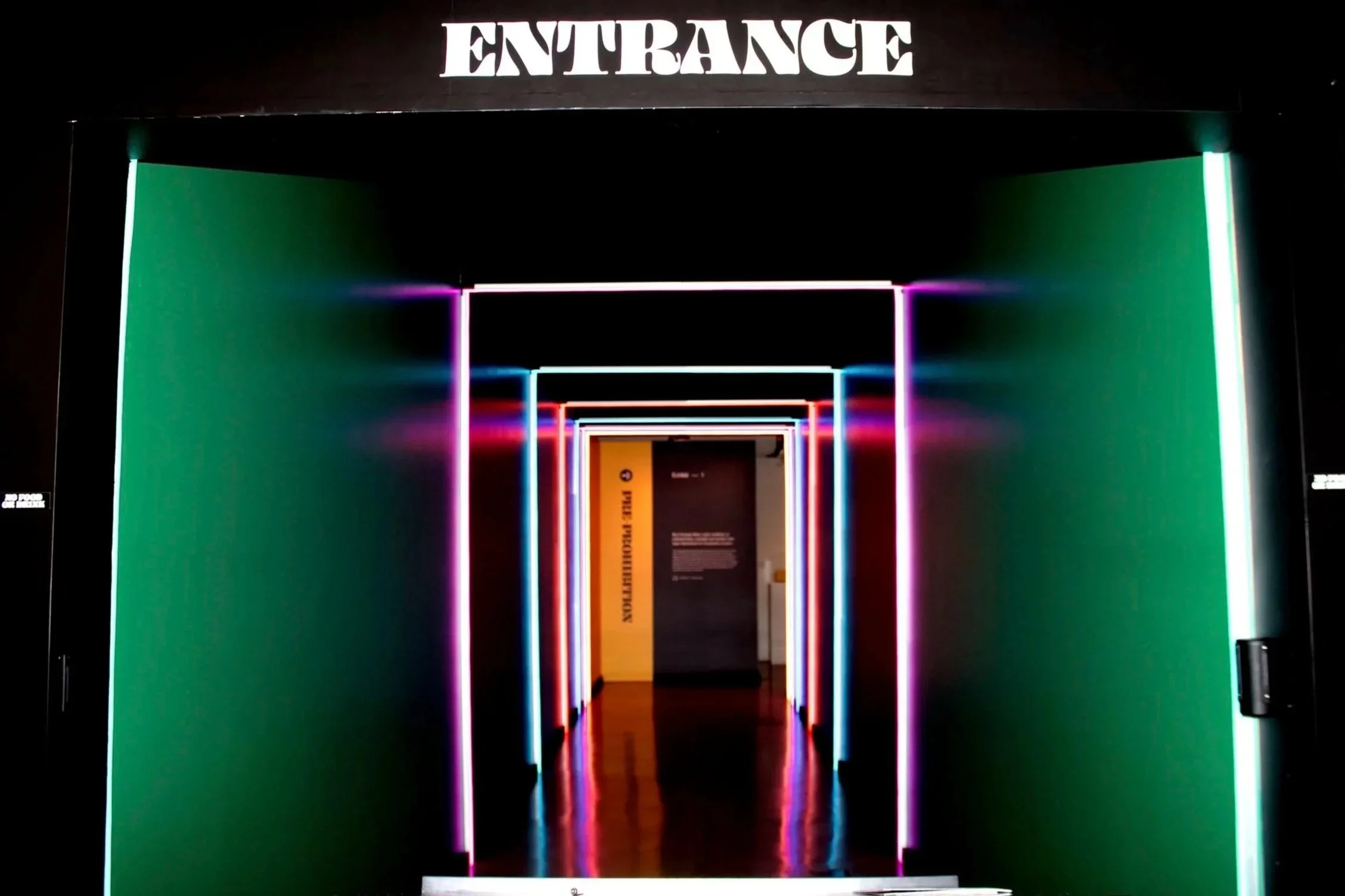
I recently attended the Psychedelic Society of Vermont Science and Spirituality Summit. It was a two-day event with psychedelic specialists: Leonard Pickard, Charles Raison, Victor Cabral, Joe Moore, Kyle Buller, Natalie Ginsberg, Matthew Johnson, Caroline Dorsen, Marisa Roberts, Franklin King, Ben Sessa and Rick Doblin. They presented their research or projects, ideas and enthusiasm around what’s happening now and what’s instore for the future of psychedelics.
I thank Rick Burnett, one of the founders of the Psychedelic Society of Vermont, for making such an event happen. I loved the opportunity to hear a variety of influential voices in the psychedelic arena. I felt each presenter was entertaining in their delivery and had an abundance of expertise in their field. And wow, the whole thing ended on Leonard Pickard reading a narrative from his most recent book, The Rose of Paracelsus. He shared the story about what happened when an underground chemist accidentally spilled ten million activated LSD doses on himself (I’ll infer the answer to this later). Some of my curiosities were answered, and many more were formed. I felt some excitement, along with a lot of worry, confusion, hopelessness, and sadness throughout most of the event. Why!?
I sat for a few days with this invasive discomfort until I realized my dissonance was with the majority of the questions being asked around psychedelics, not the answers. If we’re just getting wrong answers, well, that seems fixable. If we’re not even asking the right questions?! I’m just not sure psychedelics will help us in any new ways at all.

Q: Is moving forward with psychedelic research without acknowledging science's limitations around consciousness a good idea?
Q: Can psychedelics help us see the implicit dysfunction of hierarchy and our part in it?
Q: Can we get creative and develop studies that capture the wholeness of individuals and not fragmented disorders?
My big question:
Q: Can psychedelics help us break free from our enculturated thinking and support long-term change?
A: Not if we keep asking the same questions that got us into this mess.
————————————-
I know I’m advocating for something nearly impossible and seemingly crazy. What happens if the impossible and crazy is the only way out? I’m asking us to engage with science and spirituality differently, and for science to admit its shortcomings. We need more questions like: Is there a way of living together that readily upholds interdependence, interconnection, and the acceptance of all beings and ecosystems as worthy goals? Is there a way of living together that understands wholeness, equality, and gratitude viscerally? Can psychedelics help?
——————————————
We must explore universal truth deeply.
We need to explore wholeness, love, and truth until our brains explode with confusion so intense that we think we can’t go on. But then we do. We keep wondering. We keep noticing. A little further. We hold onto the remembering that there is more; we don’t stay in a righteous place of knowing. Yes, insights and spiritual awakenings happen, but we don’t settle for those. We remember there is further.
At the summit, there seemed to be a lot of language around whether someone or something was more scientific or spiritual, aka “woo-woo”. I found it fascinating that there was a lot of dissecting of psychedelics in this duality, “Are we using it for science or spiritual experiences?”, and that we classify the spiritual part as non-scientific.
Often, what our culture thinks of as spiritual does in fact seem unscientific. Spirituality often involves solidifying beliefs and self-centered exploration. I’m wondering about a different, more direct spirituality. Something like,
Don don dooonnnnn….
True spirituality = Exploring what is universally true until we’re living it in every moment
Everything or anything someone may call spiritual is woo-woo, besides sincerely exploring wholeness, love, and truth.
Okay, I am being a little extreme here. Exploring love, wholeness, truth (whatever label you want to tack on it) does mean one may need to explore a multitude of spiritual practices, only to later understand that those aren’t it either. We cannot measure these things. Some super sad news for all the scientists out there; thoughts and research can never get us to the unspeakable truth, or to consciousness. We can’t get to it through reason and dissection. We can’t touch it. We can’t science it up. We have to get beyond thoughts and analysis to play in the realm of truth. Truth is science's goal, but the truth I’m talking about is beyond measuring and comparison, unfortunately. Another way to define this ‘truth’ is that it’s the opposite of measuring and comparing; it’s living in nonduality; non-comparing and non-measuring. To really understand what psychedelics can do for us, we have to sincerely seek truth, not dance around it or avoid it outright, which is what I feel the psychedelic field is doing.
Lao Tzu says it all:
“The name that can be named
is not the eternal Name.”
——————————-
How can psychedelics help us get to universal truth?
What I see these medicines doing is a direct link and guide to the real truth. Psychedelics allow our enculturated thinking to slow. In that slowness, beautiful doors can open up into rooms your enculturated self couldn’t even imagine. From there, you can get curious in many directions, and all directions are wise, as long as they are encompassed by the exploration of truth. There can be wonderful learning here! In that slowness, awareness can be found. In time, one can stop trying to remember what they learned from their psychedelic discoveries and embody them. They explored the room and got a little closer to truly knowing truth, wholeness, and love.
To reiterate my point: We aren't seeing a "different reality" when using psychedelic medicines, as some presenters implied; we are seeing a clearer reality. A true reality. I'm not sure how Leonard Pickard's share at the end was understood by most (his book, The Rose of Paracelsus), but what I'm pretty sure he's getting at is that psychedelics help us more quickly get back to reality and truth (very similar to Ram Dass giving his guru psychedelics- no altered state, he was already fully alive, in love, in that moment).
What would a truth-exploring world actually look like?
Truth-explorers are inevitably curious about their actions and egos. They don’t give in easily when enculturated noise screams at them, and when they do, they pause, wonder, act accordingly, smile, and move on. If they feel guilty, they wonder about that. When they don’t feel guilty, they wonder about that too. When they hurt someone, they don’t avoid the conflict by finding a distraction; they get quiet, they pause, they notice… “Why did I do that? What am I feeling? Who am I? What am I doing all this for? What game am I playing?”… What’s behind my consciousness? What is me?!” And importantly, this exploration isn’t an analysis, it’s in lightness and curiosity. It’s a clearing of the mindbody conditioning. If we could use psychedelics as an aid to shift this ego game from “I know” to “I wonder”, then, if we’re lucky, maybe we have a shot.
Typically, the helpers in this culture aim to address individual problems. They want to separate them and focus intensely on one thing at a time. And those in need buy into this short-sighted approach as well. For example-
“Oh, your stomach hurts?
Let’s do a blood test. Stop eating ______.”
One week later, one problem is solved.
Instead of,
“Oh, your stomach hurts? What type of foods are you eating? Was the soil it was grown in laden with pesticides or herbicides? What other things are you doing when you eat? Are you anxious a lot? Why? Who do you hang out with, and do they cause you stress? What’s your worldview? What beliefs do you hold? And most importantly, how tightly is your ego holding on to you? Let’s check all those beliefs and ego-produced behaviors, slow down your lifestyle, wonder more about the cultural influences around you, and get you into a solid community to help you through this.”
Essentially, let’s work together to solve all problems and suffering by looking deeply.
Yes, we'd need real guides (not fake shamans, egotistical spiritual gurus, or therapists trained in approaches rooted in this culture) and a slower approach; it wouldn’t be easy, and it would take time. I wonder, though, if we keep treating disorders in a fragmented way, where does the wholeness of the person come in? What good does it do if we don't see, hear, and care for the whole of a person? When I tell someone, “You are depressed. You have anxiety.”, aren’t I telling them you are broken and I see you in parts? When I try to heal someone by “fixing” a part of them, what does that say about their being? We get messaging "you're not enough" and “you’re broken” from the day we're born. I wonder if psychedelics can help people know that's a lie. And I wonder how they will ever know that's a lie if we keep modeling for them like it's true.
—————————————
If we are to seek outwardly for answers through drugs or medicines (in this case, psilocybin, MDMA, and Ketamine), without top-tier guidance around the ego’s role in our cultural creations, we are perpetuating the same cycle of dysfunction that we see now.
Yes, it seems impossible, but only because we believe it is. It’s not just stomachaches; All problems fit into this model. When one understands deeply that all problems are rooted in the same thing- fear and insecurity, then one can start to pull up the roots. But the psychedelic field is not talking about that yet.
To be sincere, Leonard's story and Franklin's questions were needed for me to have hope for good to come from all this psychedelic noise. If we move forward in the same way we moved in the past, nothing will change.
I get that we want it legalized, and it will help some people a lot with debilitating illnesses. I’m all for that! But I'm not so sure any lasting societal change can happen if we continue to dance around some big elephants.

Pretty sure this all is a long-winded way for me to say... I think we need more dialogue, and we need to slow down. I know this is a fairly impossible request for the scientific community, but hey! Gotta say it.
Referencing Leonard’s book seems to be a solid way to sum up this post and Love University’s mission:
“How can you have seen what you described except not for the overdose?
“I saw the world as it truly is. God, if you will, the ultimate consciousness, would not be so cruel as to make such glory dependent on a substance. The greatest gift is the natural mind, that which cannot be created or destroyed by any drug, that which we have always.”